Article to mark 40 years since the tragedy at the Chornobyl Nuclear Power Plant — an event that remains the most severe nuclear accident in history.
25 April 2026 08:37
Forty years ago, on April 26, 1986, the tragedy at the Chornobyl Nuclear Power Plant occurred — an event that remains the most severe nuclear accident in history.
In this context, we present an English translation of an article by the Ukrainian Institute of National Memory, authored by Nataliia Slobozhanina and based on Serhii Plokhii’s two-volume edition The KGB Chornobyl Files and Chernobyl: The History of a Nuclear Catastrophe (Folio Publishing House).
The article is a well-grounded and informative piece that highlights both the historical context of the Chornobyl disaster and its continued significance today.
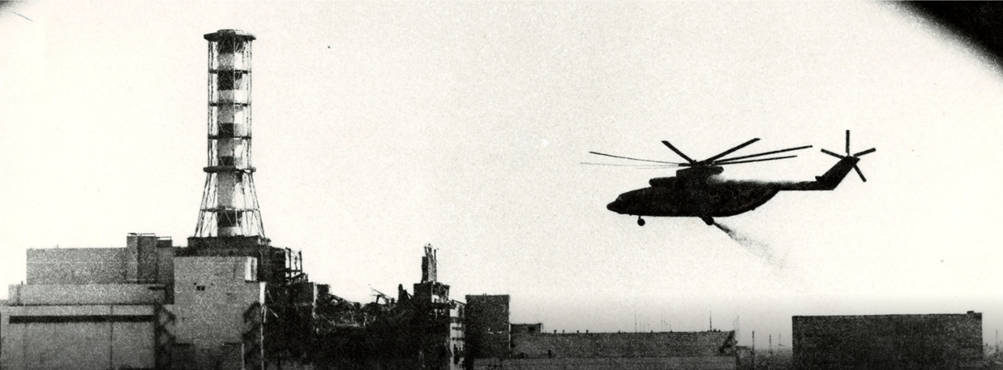
Photo: S. Volodin, National Chornobyl Museum
What the Soviet Authorities (Un)Concealed About Chornobyl
The information about the largest man-made disaster in human history, caused by the explosion at the fourth reactor of the Chornobyl Nuclear Power Plant on April 26, 1986, was immediately classified by the party and state leadership and the USSR's special services.
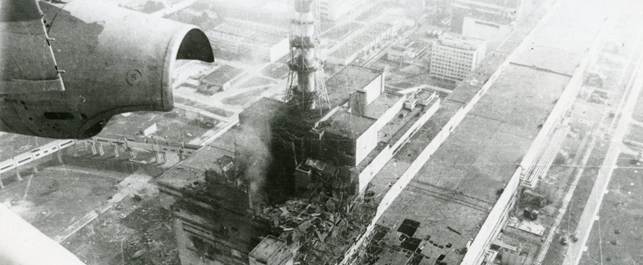
Photos: V. Yevtushenko (Courtesy of the National Chornobyl Museum)
Prohibition of Disseminating Information Within the Country
On April 26, the Kyiv City and Regional Directorate of the KGB sent one of its first reports to the USSR KGB, stating:
“In order to prevent the leakage of information and the spread of false and panic-inducing rumors, control has been established over outgoing correspondence, and access to international communication lines has been restricted.”
Although authorities began evacuating residents from Pripyat and nearby villages on the afternoon of April 27, the Soviet government — and, accordingly, the “most honest” press in the world — stayed silent about what had happened.
At 9:00 p.m. on April 28, a newsreader on the television program Vremya briefly reported an accident at the Chernobyl Nuclear Power Plant: one reactor had been damaged, officials were assisting those affected, and the government had set up a commission. This deliberately brief statement created the impression of a minor, controlled incident with no cause for concern.
On April 29, 1986, Leonid Bykhov, head of the KGB Directorate of the Ukrainian SSR for Kyiv and the region, ordered officials “to intensify the work of city and district bodies at enterprises and institutions in order to suppress the spread of provocative and panic-inducing rumors, and to apply the most decisive measures against their instigators.” District departments had to report twice daily — by 11:00 a.m. and 5:00 p.m. — to the duty officer of the KGB Directorate the number of “boltunov” (rumormongers) identified, the number of preventive conversations conducted, and the number of formal warnings issued to individuals.
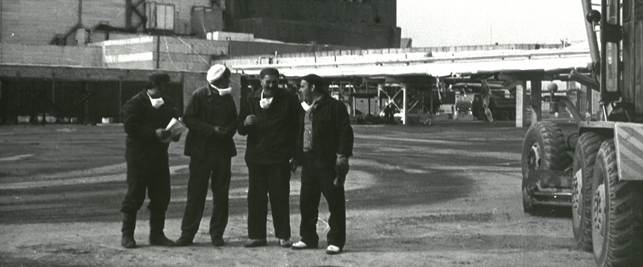
Photo: V. Ostapenko (Courtesy of the National Chornobyl Museum)
On April 30, the newspaper Pravda broke the silence and published a brief note, essentially repeating what had been announced on the Vremya television program, adding that the evacuation of people from Pripyat had taken place and that radiation levels were being carefully monitored.
The head of the KGB of the Ukrainian SSR, Stepan Mukha, in a memorandum to the First Secretary of the Central Committee of the Communist Party of Ukraine, Volodymyr Shcherbytskyi, reported on the efforts of the security services to ensure proper control „over the operational situation in the Kyiv, Chernihiv, and Zhytomyr regions in connection with the extraordinary events that occurred on April 26 at the Chernobyl Nuclear Power Plant,” ahead of the May Day celebrations.
The Day of Workers’ Solidarity was one of the most important ideological holidays in the Soviet Union, therefore, the authorities could neither ignore nor cancel its celebration. Despite the fact that the wind was carrying a radioactive cloud toward Kyiv, the party and state leaders in the Kremlin instructed that a large-scale parade be held in the city.
As Serhii Plokhii writes in Chernobyl: The History of a Nuclear Catastrophe:
“It was meant to serve as a signal to the international community that the situation was under control, that people were safe and felt protected, while Western media, by spreading false information about massive destruction and thousands of casualties as a result of the accident, became part of a propaganda war. Footage of smiling Kyiv residents marching through the city center was intended to convey a message to everyone: the Party is in control.”
At the same time, these images became powerful evidence of the Soviet authorities’ crime against the population: “Thousands of Kyiv residents took to the main avenue of the Hero City — Khreshchatyk — on May 1,” wrote the newspaper Vechirnyi Kyiv on May 2. “More than 120,000 Kyiv residents and guests of the capital took part in the celebrations on Khreshchatyk.” These figures raise some doubts, as local party authorities had set quotas of 2,000 participants from each of Kyiv’s ten districts (while the usual turnout stood closer to 5,000)
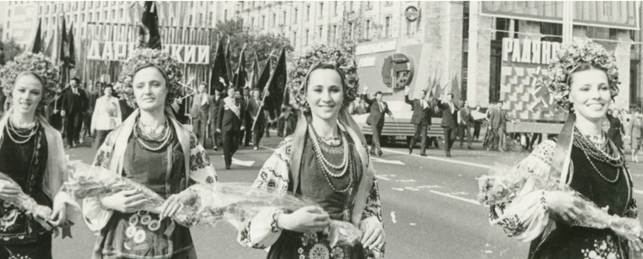
Photo: V. Repik, V. Burmatov (Courtesy of the National Chornobyl Museum)
By the morning of May 3, hospitals in Ukraine had admitted 911 patients with symptoms of radiation exposure. The following day, the number rose to 1,345, including 330 children. Soon, radiology departments in Kyiv became overwhelmed, and patients were admitted to facilities outside the city.
Authorities enforced an information blockade at every level. Even within the exclusion zone, the Chornobyl newspaper Prapor Peremohy (“Banner of Victory”) published nothing about the disaster. Instead, its final issue carried triumphant slogans:
“Soviet people can live in peace: the Party is deeply aware of its responsibility for the future of the state.”
In May 1986, the 5th Department of the 6th Directorate of the USSR KGB compiled a list of 26 categories of information related to the Chornobyl events that had to remain classified. To downplay the scale of the catastrophe, state security bodies monitored and suppressed any discussion — both in the press and in private — of the causes of the accident at Reactor No. 4, the extent of the destruction, the composition and volume of material released during the explosion, radiation levels inside the plant and within the 30-kilometer zone, the scope of decontamination work, statistics on radiation sickness among plant staff, liquidators, and evacuees, as well as cases of mass poisoning and epidemiological illnesses related diseases. The list also included data on state spending for sealing Reactor No. 4 and the number of organizations and personnel involved in the cleanup.
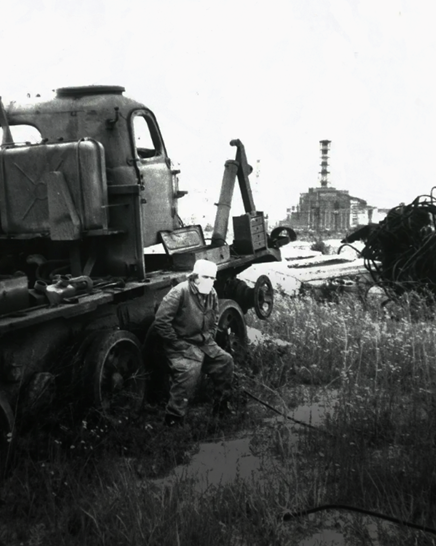
Photo: V. Ostapenko / National Chornobyl Museum
To conceal the scale of the tragedy, the authorities took unprecedented steps to distort medical diagnoses: “According to data from the Shevchenkivskyi District Department of the KGB Directorate in Kyiv, the administration of Kyiv region and 25 hospitals, based on a directive from the Ministry of Health of the Ukrainian SSR, recorded diagnoses of ‘vegetative-vascular dystonia’ in the medical histories of patients with signs of radiation sickness,” states a report from the 6th Department of the KGB Directorate of the Ukrainian SSR in Kyiv, dated May 13, 1986.
Preventing the Spread of Information About the Incident Beyond the Country
Drawing on their prior experience of concealing the facts of man-made disasters that had periodically occurred in the Soviet Union, the authorities intended once again to suppress information. The problem, however, was that the scale of this catastrophe was incomparably greater – an estimated 50 million curies of radioactive substances had been released into the atmosphere. Moreover, the Chornobyl Nuclear Power Plant was located in the European part of the Union, and winds carried the radioactive emissions across Belarus and Lithuania toward Sweden and Finland, and beyond. As a result, Sweden was the first to respond to the increased radiation levels in the air and demanded explanations from the Soviet government. It became impossible to hide the fact of the accident in the face of an emerging international scandal.
The KGB in Kyiv was receiving instructions from Moscow regarding what could and should be said about the Chornobyl disaster, both for internal audiences and for Western ones. The causes were framed exclusively as human error, while technological and design flaws were deliberately omitted.
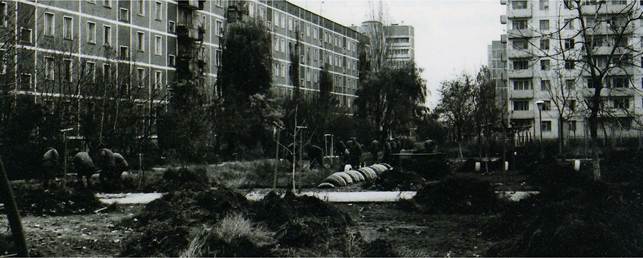
Photo: V. Dubov
The news about the events at Chornobyl quickly became a top story in Western and American media.
On April 29, 1986, CIA experts prepared a report on the Chornobyl incident, calling it the worst nuclear disaster in history and emphasizing that rumors of thousands of dead and injured in various ways due to the accident were not unfounded. On the same day, the administration of U.S. President Ronald Reagan offered assistance to a Soviet diplomat who had arrived at the State Department to discuss nuclear arms issues. On April 30, Ronald Reagan received a message from Mikhail Gorbachev. Serhii Plokhy, in his book Chornobyl. The History of a Nuclear Disaster, cites this message:
“The USSR declares that the release of radioactive materials has led to the partial evacuation of the population... the radiation situation has stabilized... contamination levels, despite partially exceeding permissible norms, do not require any special measures to protect the population.”
In response to the offer of assistance, Soviet propaganda launched a series of press publications about nuclear accidents abroad.
On April 30, in Moscow, a briefing was held for foreign ambassadors by the First Deputy Minister of Foreign Affairs of the USSR, Anatoly Kovalyov, regarding the events at the Chornobyl Nuclear Power Plant. The overall message was that the situation was not as dire as the Western media was portraying it. Afterward, the foreign ministers of the republics received instructions and clarifications concerning how local authorities were to inform foreigners about the accident. The main talking points were that there was no threat to public health and that “the task was to prevent sick individuals from leaving the country, so as not to give our enemies any chance to exploit random incidents for anti-Soviet purposes.”
On May 5, during a meeting in Tokyo, the leaders of the G7 prepared a joint statement regarding the Chornobyl disaster:
“We urge the Government of the Soviet Union to immediately provide all the information requested by our countries and others.”
The world was eager to obtain truthful information about the event. Between April 27 and May 22, a total of 22 visits by foreign diplomats to Kyiv took place. All information was classified, and to prevent any leaks, the KGB closely monitored the movements of foreign correspondents and diplomatic personnel, intercepted phone calls, and blocked television broadcasts.
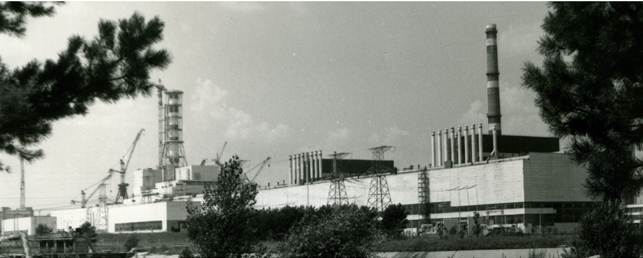
Photo: From the collection of K. Novokhatskyi (Courtesy of the National Chornobyl Museum)
On May 8, at the invitation of Soviet authorities, the Director General of the IAEA, Hans Blix, arrived in Kyiv. The purpose of the visit was, on one hand, to demonstrate the government’s openness, and on the other – to show, if possible, that the scale of the disaster was not as terrifying as portrayed by the Western press. The authorities debated for some time how to transport Blix to the Chornobyl Nuclear Power Plant. Traveling by road posed a danger of passing through clouds of radioactive dust that had settled on the ground. Dosimeters in such areas registered off-the-scale radiation levels. From a helicopter, the secret radar station Duga was visible. After prolonged consultations, Mikhail Gorbachev authorized the use of a helicopter.
Historian Serhii Plokhy writes that it is unknown whether Blix noticed Duga, but inside the helicopter cabin, at an altitude of 400 meters and a distance of 800 meters from the reactor, he recorded radiation levels of 350 milliroentgens per hour. No measurements were taken outside the helicopter cabin, and the power plant itself was not visited. The group landed in Chornobyl and flew back to Kyiv from there. At a press conference in Moscow, Blix stated:
“We were able to see people working in the fields, livestock grazing, and cars moving through the streets. The Russians are confident that they will be able to decontaminate the area. It will become suitable for agriculture again.”
KGB information reports were filled with stories of foreigners seeking the truth. From May 23 to 25, 1986, a film crew from the American CBS television network worked in Kyiv. They were placed under constant surveillance. Along their route, operatives and agents were deployed, who, if necessary, posed as ordinary passersby or station workers and conveyed information favorable to the Soviet authorities.
“The KGB carried out a set of operational measures in order to obtain information about the Americans’ intentions, monitor their actions, examine the equipment they used, and deliver advantageous information to the foreigners,” reported Stepan Mukha, head of the KGB of the Ukrainian SSR, to Volodymyr Shcherbytskyi, First Secretary of the Central Committee of the Communist Party of Ukraine.
Lacking reliable information, foreign governments began recalling their citizens from Kyiv and Minsk. Most of them were students. Representatives of “developing countries,” seeing their classmates leave, began contacting their embassies with requests for evacuation. These were students from Egypt, Nigeria, India, and Iraq. The KGB reported that “they simply wanted to get free tickets home and longer vacations…”
